
Headless commerce is one of those terms that comes up at every e-commerce conference, yet is rarely explained clearly. In reality, the concept is not all that complicated from a technical perspective. The key question is rather: who is the effort really worthwhile for, and when is it simply expensive overengineering?
What headless actually means
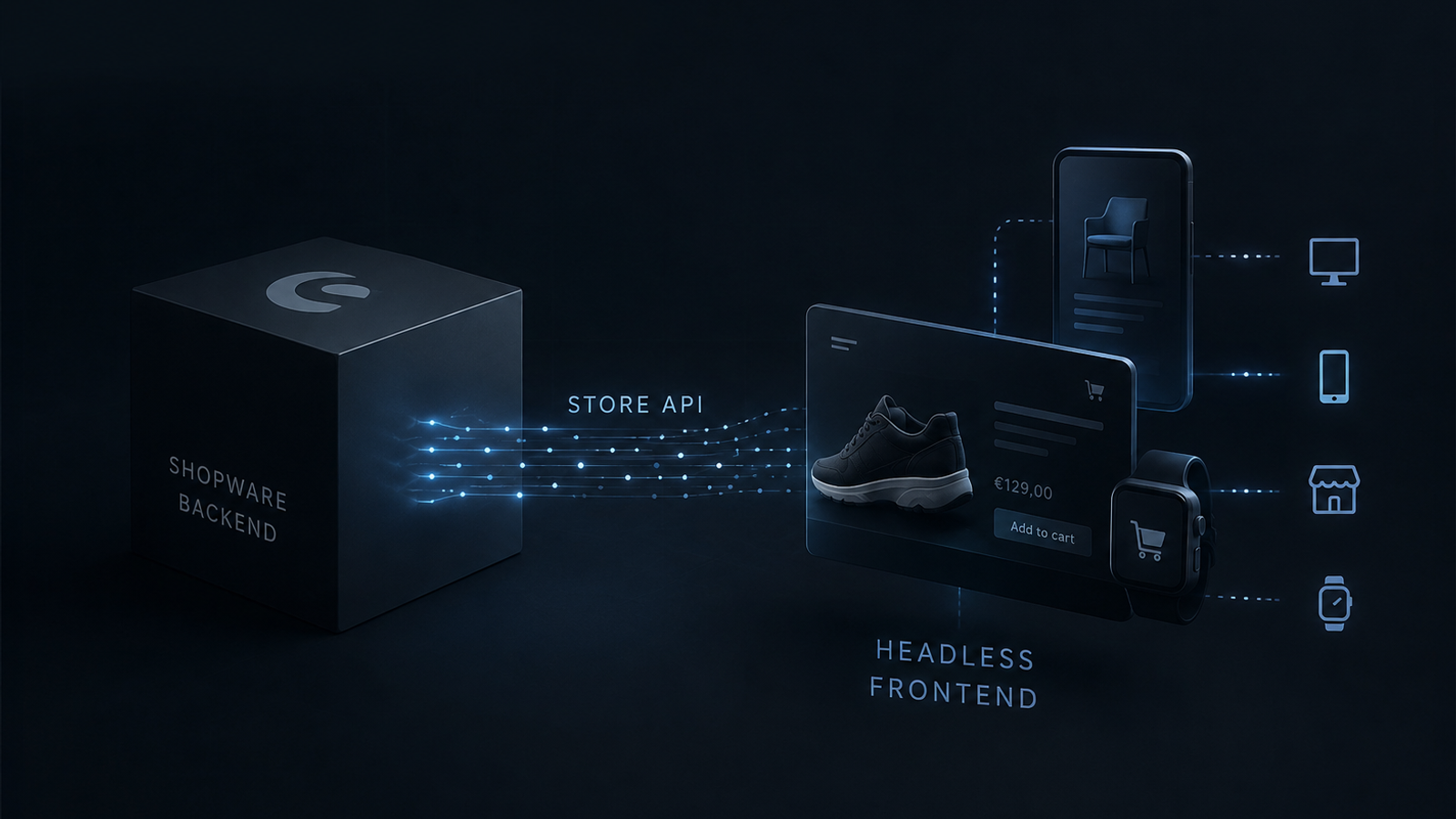
In a traditional shop system, the backend and frontend are inseparably connected. The system, such as Shopware, manages the data and renders the pages that the customer sees at the same time. With a headless approach, these two layers are consistently separated:
- The backend: Product data, prices, shopping cart, and checkout remain in the core system, such as Shopware.
- The frontend: The visible interface is built completely independently, typically using a modern JavaScript framework such as Next.js, Nuxt, or Astro.
Communication between these two worlds runs efficiently via programming interfaces, such as the Shopware Store API.
The real advantages
A custom-built frontend gives you full control over performance, design, and the entire user journey.
- Maximum performance: Core Web Vitals can be optimized in a targeted way because there is no heavy theme overhead to carry along.
- Flexible content management: Content can be managed flexibly through a specialized CMS such as Contentful or Storyblok, while the shop system only provides the transaction data.
- Omnichannel excellence: For brands that are present across several channels, such as an online shop, native app, and digital POS kiosks, headless makes it possible to use the same backend and adapt only the frontend for each channel.
When it makes sense: Headless commerce makes sense if you have extremely specific performance requirements, a strong in-house development team, or want to serve multiple touchpoints through one central backend.
The honest drawbacks
Where there is light, there is also shadow. A headless frontend has to be fully developed, tested, and maintained independently.
Every function that a shop system already provides in its standard frontend has to be reimplemented in your own frontend: from search and filters to the shopping cart, checkout, and customer account. This means significant initial and ongoing effort. In addition, updates on the backend side can introduce structural changes to the API that have to be handled manually. Without a permanent development team in the background, you can quickly end up after launch with a system that is rigid and difficult to maintain.
The alternative: composable commerce
To make getting started easier, Shopware offers a structured foundation for headless projects with its Shopware Frontends project, based on Vue.js and Nuxt. This significantly reduces the initial development effort, as many important standard components are already prebuilt. For many companies, this is the most sensible and safest entry point into the headless world, without having to reinvent the wheel from scratch.
Conclusion: a question of resources
Whether a headless approach is the right decision for your online shop depends heavily on your individual requirements, your growth goals, and the resources available to you.
We’ll be happy to help you realistically assess the costs and benefits before you make a strategic decision that may be difficult to reverse later. Want to know whether your shop is ready for headless? Let’s have a no-obligation conversation.